

Ice Dams: What They Are, How They Form, and Why Homeowners Should Take Them Seriously
/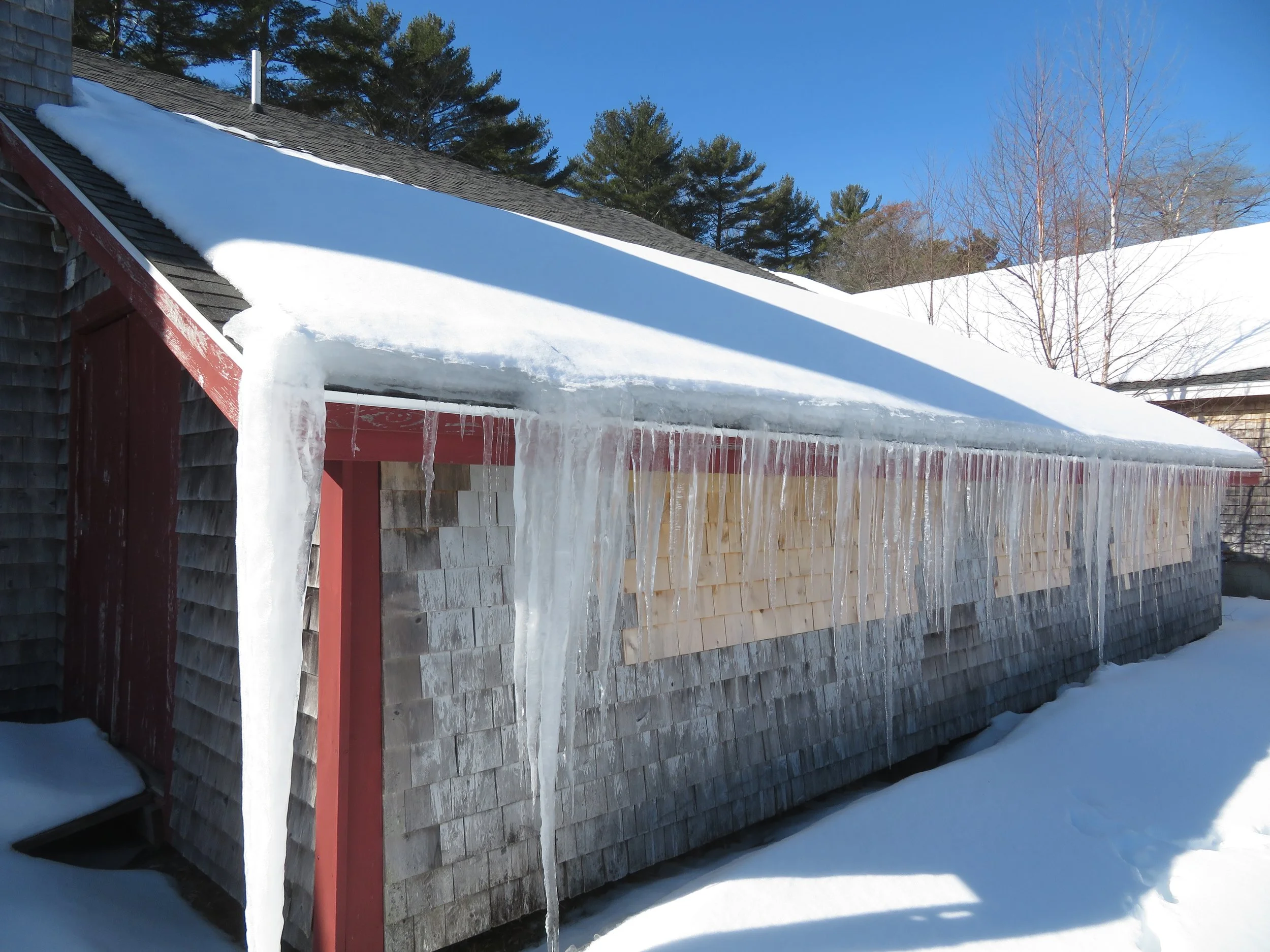
If you live in Maine or any cold-weather climate, you’ve probably seen thick ridges of ice hanging from roof edges. In the photos above, you can see significant icicle buildup along the eaves and a thick band of ice beneath the snowpack. That condition is known as an ice dam — and it can cause serious damage to a home.
At Breakwater Inspections, we frequently observe ice damming during winter inspections. Understanding how and why they form is the first step in preventing costly repairs.
What Is an Ice Dam?
An ice dam is a ridge of ice that forms along the edge (eaves) of a roof. It blocks melting snow from draining properly. When water backs up behind this ice ridge, it can seep under shingles and into the home.
Ice dams are not just decorative icicles. Long icicles like those shown in the photos are often a visible warning sign that ice damming is occurring above.
How Do Ice Dams Form?
Ice dams develop through a simple but destructive cycle:
Snow accumulates on the roof.
Heat from inside the house warms the roof deck.
The bottom layer of snow melts, even when outdoor temperatures are below freezing.
Meltwater flows down the roof toward the colder eaves.
The water refreezes at the roof edge, forming a ridge of ice.
The cycle repeats, building thicker ice over time.
In the images above, you can see:
A pronounced ice ridge at the eaves.
Extensive icicle formation.
Heavy snow coverage above the ice line.
That’s classic ice dam development.
Ice Dams Can Form Without Gutters
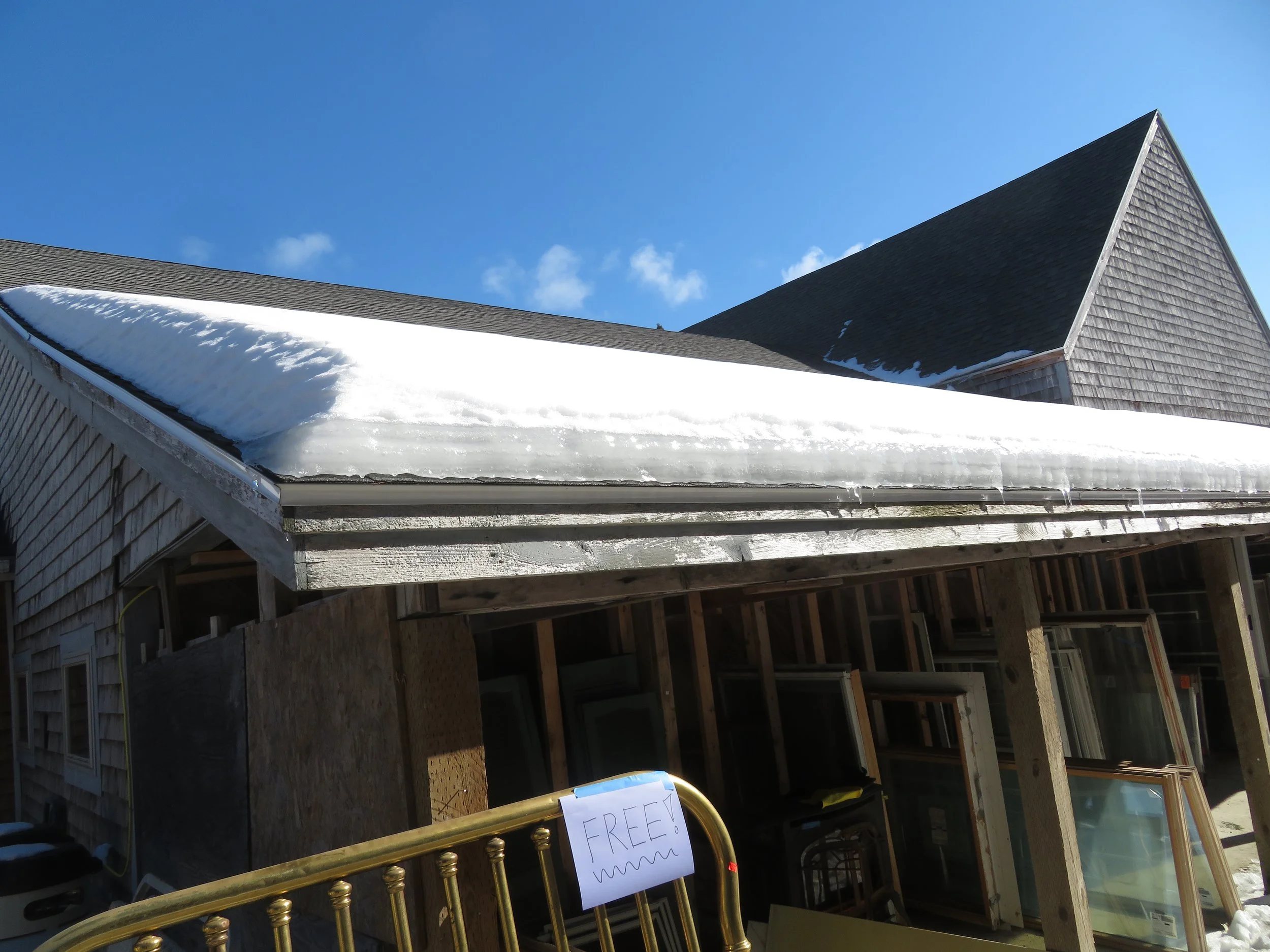
There is a common misconception that gutters cause ice dams. While clogged or poorly installed gutters can contribute to ice buildup, gutters are not required for ice dams to form.
Ice dams develop primarily because of:
Heat loss from the interior of the home.
Inadequate attic insulation.
Poor attic ventilation.
Air leakage into the attic (recessed lights, attic hatches, wiring penetrations).
In fact, as shown in one of the photos above, ice dams can form on roof edges with minimal or no gutter influence. The key factor is temperature differential — warm roof surface above and freezing temperatures at the eaves.
Why Are Ice Dams a Concern?
Ice dams are not just cosmetic. They can cause significant damage, including:
1. Interior Water Damage
Water that backs up behind the ice can:
Soak roof sheathing
Leak into insulation
Stain ceilings and walls
Cause drywall damage
2. Mold Growth
Repeated wetting of insulation and framing creates ideal conditions for mold development.
3. Structural Deterioration
Prolonged moisture exposure can rot roof decking, fascia boards, and wall framing.
4. Shingle Damage
The freeze-thaw cycle can loosen or damage shingles, reducing roof life expectancy.
5. Safety Hazards
Large icicles and falling ice sheets pose risks to people below.
The long, thick icicles shown in the photos are a visible indicator that melting and refreezing is actively occurring — which means water movement is happening beneath the snow layer.
How to Prevent Ice Dams
Effective prevention focuses on controlling heat loss and roof temperature:
Improve attic insulation levels.
Seal air leaks between the living space and attic.
Ensure proper attic ventilation (balanced intake and exhaust).
Maintain consistent roof surface temperatures.
Carefully remove excessive snow buildup when conditions warrant.
Temporary fixes like roof raking can reduce immediate risk but do not address root causes.
When to Be Concerned
You should be concerned if you notice:
Thick ice ridges along the eaves.
Large, persistent icicles.
Water stains on ceilings during winter.
Ice buildup recurring every season.
If ice dams are present, the underlying issue is almost always energy loss or ventilation imbalance.
Final Thoughts
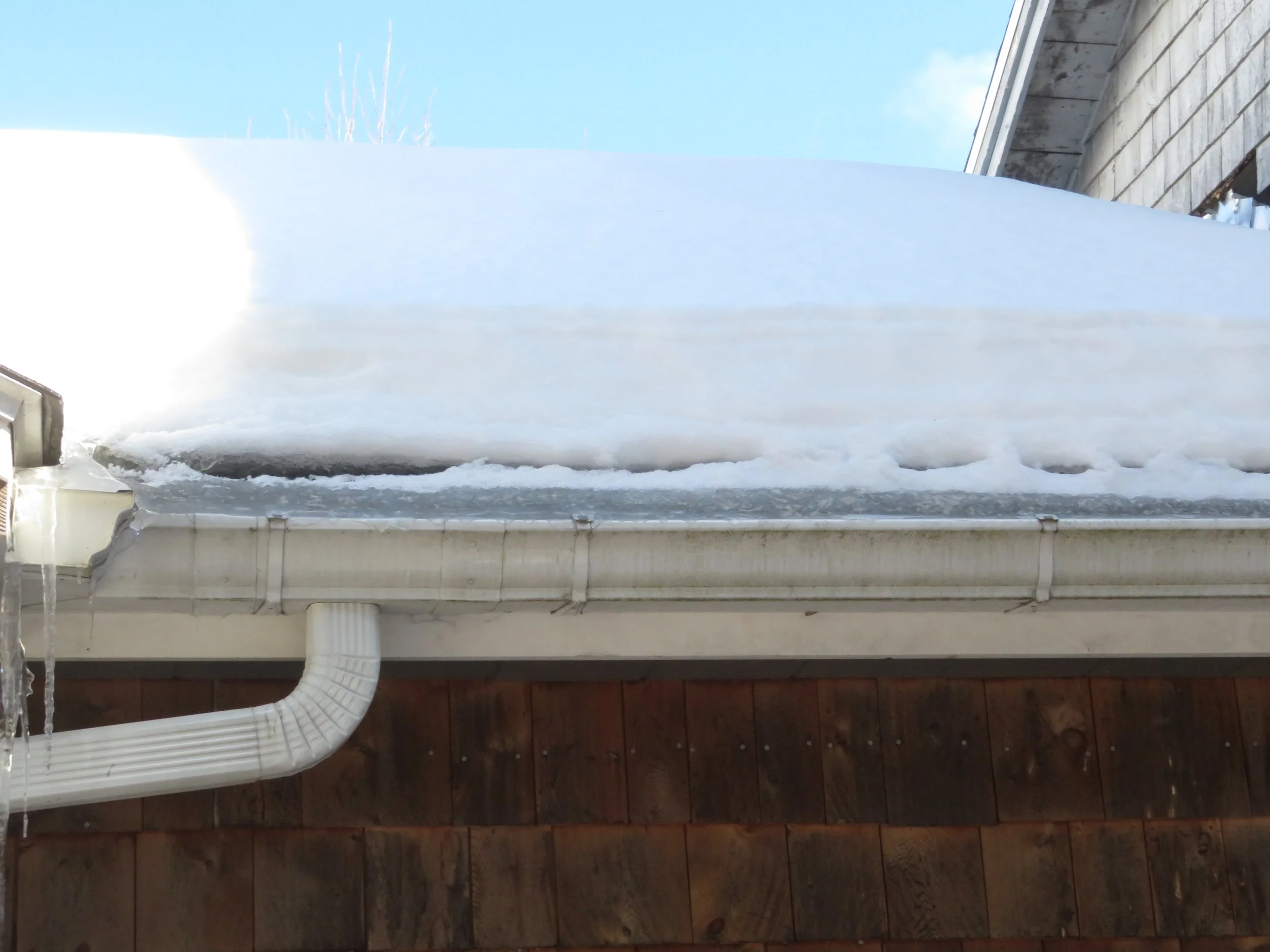
Ice dams are a building performance issue — not just a winter nuisance. They indicate that heat is escaping from the home and that roof edge temperatures are allowing refreezing.
The photos above show textbook examples of significant ice dam formation. Left unaddressed, this condition can lead to interior damage and long-term structural concerns.
If you’re experiencing ice dams or want to understand how your home is performing during winter, Breakwater Inspections can help evaluate insulation, ventilation, and roof conditions to identify contributing factors before damage occurs.
Winter reveals weaknesses in a home. Ice dams are one of the clearest warning signs.