The Importance of Home Inspections for Both Buyers and Sellers

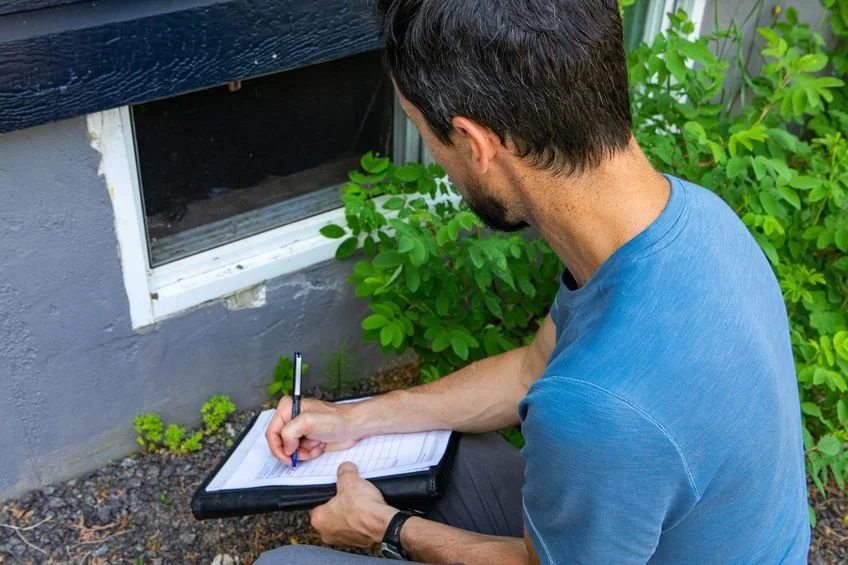
A home inspector looking at windows in a home.

The process of buying or selling a home is a unique one; It’s exciting, sometimes a little nerve-wracking, and often filled with plenty of unknowns. That’s where a professional home inspection becomes incredibly valuable. A thorough inspection doesn’t just identify potential issues, it also provides clarity, confidence, and peace of mind for everyone involved in the transaction.

Whether you're preparing to purchase your dream home or getting ready to put your property on the market, a professional inspection plays a key role in helping you move forward with confidence.

Why Home Inspections Matter for Buyers

For buyers, a home inspection is like having a knowledgeable guide walk you through the true condition of the property. Behind freshly painted walls or a beautifully staged living room, there may be components that deserve a closer look, from roofing and foundations to electrical systems, plumbing, and more.

A professional inspection helps buyers:

·       Understand the current condition of the home

·       Identify potential repairs or safety concerns

·       Plan for future maintenance and improvements

·       Make informed decisions before finalizing a purchase

Most importantly, an inspection provides context. Regardless of age, every home has quirks and maintenance needs. In a place like Maine, where many homes have lived through generations of weather and history, understanding the structure, materials, and aging components can make all the difference.

Buyers who schedule a home inspection gain a clearer picture of what they’re investing in, allowing them to move forward with realistic expectations and fewer surprises after closing.

Why Sellers Benefit from Inspections Too

While inspections are often associated with buyers, sellers can benefit just as much from having one completed before listing a property.

A pre-listing inspection gives homeowners the opportunity to see their property through the eyes of a professional inspector. This can help identify issues early, before they appear during negotiations or cause unexpected delays during a sale.

The benefits of home inspections for sellers include:

·       Addressing potential issues proactively

·       Pricing the home more accurately

·       Building trust with potential buyers

·       Reducing the likelihood of last-minute surprises

When sellers already understand the condition of their home, they can approach the selling process with far more confidence. In many cases, resolving smaller concerns ahead of time can help prevent them from becoming bigger negotiation points later.

Scheduling a pre-listing home inspection can also make a home stand out in competitive markets by demonstrating transparency and preparedness.

Experience Matters…Especially in Maine Homes

Homes across Maine tell stories. Some are newly constructed, while others have stood proudly for decades, or even centuries. Older and historic properties often feature traditional building methods, aging materials, and unique structural characteristics that require an experienced eye to evaluate properly.

Inspectors familiar with these types of homes can provide practical insight into how a property has aged, how systems have evolved over time, and what homeowners should realistically expect moving forward.

Our inspections are performed by a Certified Professional Property Inspector with hands-on experience evaluating single-family homes, condominiums, and multifamily residential buildings. With extensive familiarity inspecting both modern construction and historic Maine properties, the goal is always the same: provide clear observations, answer questions, and ensure clients fully understand the home they’re buying or selling.

To schedule a home inspection in the Rockland, Maine area, contact us today.

Heat Pumps in Maine: What Homeowners Should Know Before Installing One

Heat pumps are rapidly becoming one of the most common heating systems in Maine. With strong incentive programs through Efficiency Maine and thousands of successful installations statewide, heat pumps are no longer “new” or experimental technology.

Yet we still hear the same questions during home inspections:

  • Do heat pumps really work in Maine winters?

  • Can they heat an entire home?

  • Are they more expensive to operate than oil or propane?

Let’s address these concerns with facts.

What Is a Heat Pump?

A heat pump is an electric system that moves heat rather than creating it by burning fuel.

  • In winter, it extracts heat from outdoor air and transfers it indoors.

  • In summer, it reverses operation and functions as an air conditioner.

Modern cold-climate models are specifically engineered for northern states like Maine.

Do Heat Pumps Work in Maine’s Cold Climate?

Yes — when properly selected and installed.

According to information published by Efficiency Maine:

  • Modern cold-climate heat pumps can operate well below 0°F.

  • Many models continue producing usable heat down to approximately -15°F to -20°F.

  • They are widely installed across Maine, including northern regions.

Older generations of heat pumps did struggle in extreme cold. That is no longer the case with current high-performance systems.

However, design matters. Systems must be:

  • Properly sized for the home

  • Correctly installed

  • Matched to the home’s insulation and air sealing levels

When performance complaints arise, they often stem from improper sizing or installation — not the technology itself.

Can a Heat Pump Heat an Entire Home?

In many Maine homes, yes.

Heat pumps can function as:

  • A primary heating system

  • A supplemental system alongside oil or propane

  • A whole-home ducted system

  • A multi-zone mini-split system

That said, the home’s building envelope plays a major role. Homes with significant air leakage or poor insulation may struggle to maintain comfort unless energy efficiency improvements are made.

From a home inspection perspective, we often see the best results when heat pump installation is paired with:

  • Air sealing

  • Insulation upgrades

  • Proper system planning

A heat pump is only as effective as the house it is heating.

Are Heat Pumps Efficient?

Yes — extremely.

Unlike oil or propane systems that generate heat through combustion (with inherent efficiency losses), heat pumps move heat.

This allows them to operate at efficiencies often ranging from 200% to 300% under typical winter conditions. In practical terms, that means:

For every unit of electricity consumed, the system can deliver two to three units of heat.

No combustion-based system can achieve that level of performance.

Do Heat Pumps Cost More to Operate Than Oil or Propane?

In most Maine scenarios, they do not.

Operating costs depend on:

  • Electricity rates

  • Oil and propane prices

  • Outdoor temperatures

  • Home insulation levels

  • System efficiency

Historically, heating oil and propane prices in Maine have been volatile and often high. Based on comparative data shared by Efficiency Maine, high-performance heat pumps are typically among the lowest-cost heating options available in the state on a per-BTU basis.

During extreme cold snaps, operating costs may temporarily increase, which is why some homeowners maintain a secondary heat source. But across an entire heating season, many Maine homeowners report lower overall heating costs after installing heat pumps.

What About Rebates in Maine?

Efficiency Maine currently offers significant rebates for qualifying installations, including:

  • Incentives for single-zone systems

  • Incentives for multi-zone systems

  • Enhanced rebates for income-eligible households

These incentives can substantially reduce upfront costs and improve return on investment.

Homeowners should verify current rebate programs directly with Efficiency Maine, as offerings may change.

Common Myths — Clarified

“Heat pumps don’t work below freezing.”
Modern cold-climate systems are designed specifically for sub-zero conditions.

“They only blow lukewarm air.”
Heat pumps deliver steady, consistent heat. The air may feel less hot than a furnace blast, but they maintain comfortable indoor temperatures effectively.

“They can’t heat an entire Maine home.”
When properly designed and installed, they absolutely can.

“They cost more than oil.”
In many Maine cases, they cost less over a full season.

A Home Inspector’s Perspective

At Breakwater Inspections, we evaluate homes as complete systems. Heating performance is never just about the equipment — it’s about:

  • Insulation

  • Air sealing

  • Electrical capacity

  • Distribution design

  • Overall home condition

Heat pumps are a strong option for many Maine homes, but like any system, success depends on proper planning and installation.

If you are buying, selling, or evaluating a property with a heat pump — or considering installing one — understanding how the system integrates with the home is critical.

Bottom Line

Heat pumps are not a trend in Maine — they are an established, high-efficiency heating solution supported by state incentive programs and real-world performance data.

When properly designed and installed in a well-performing home, they:

  • Operate efficiently

  • Perform reliably in cold weather

  • Often reduce heating costs

  • Provide both heating and cooling

If you have questions about how a heat pump system is functioning in your home, a comprehensive inspection can help you make informed decisions.

Ice Dams: What They Are, How They Form, and Why Homeowners Should Take Them Seriously

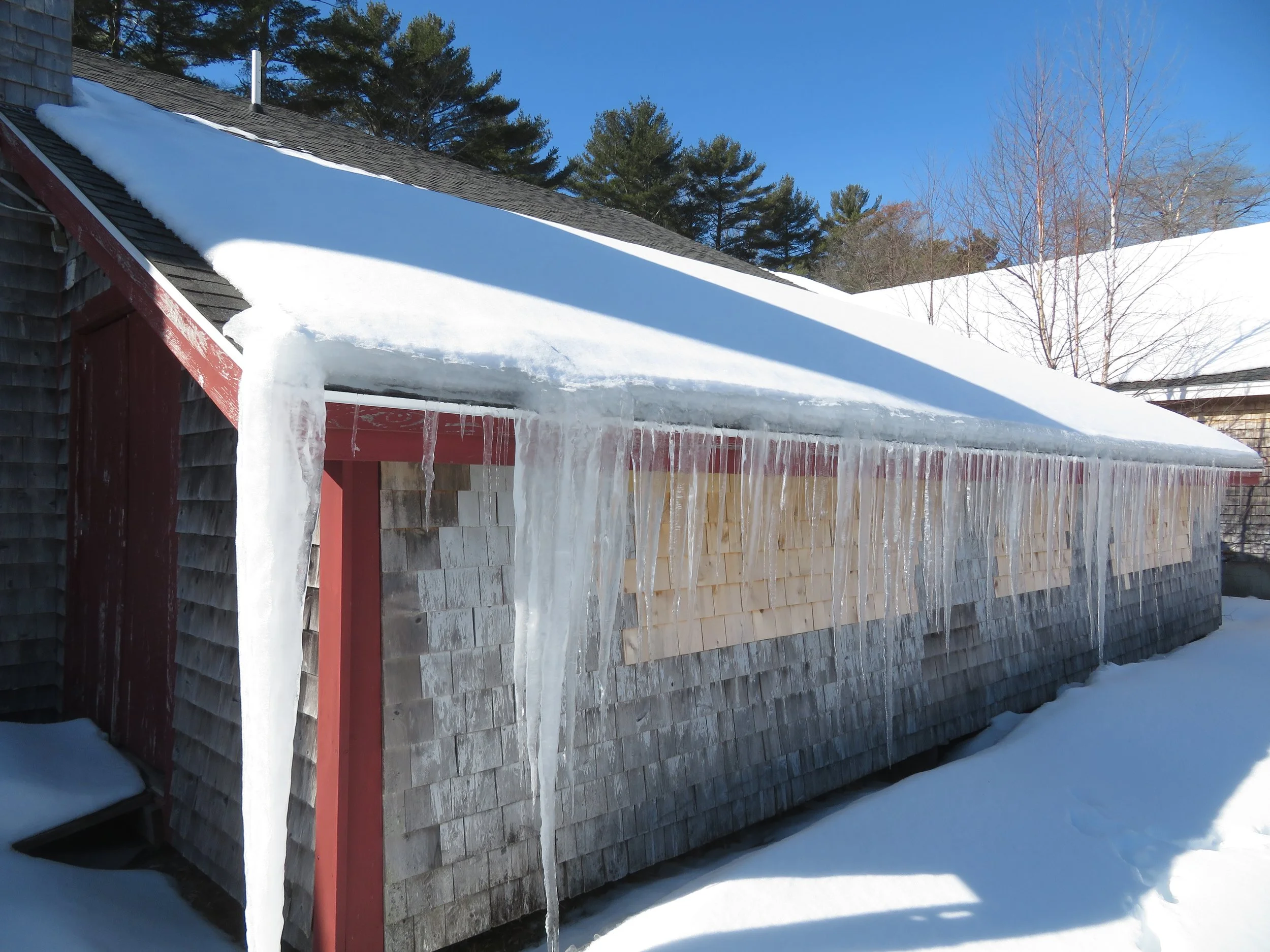
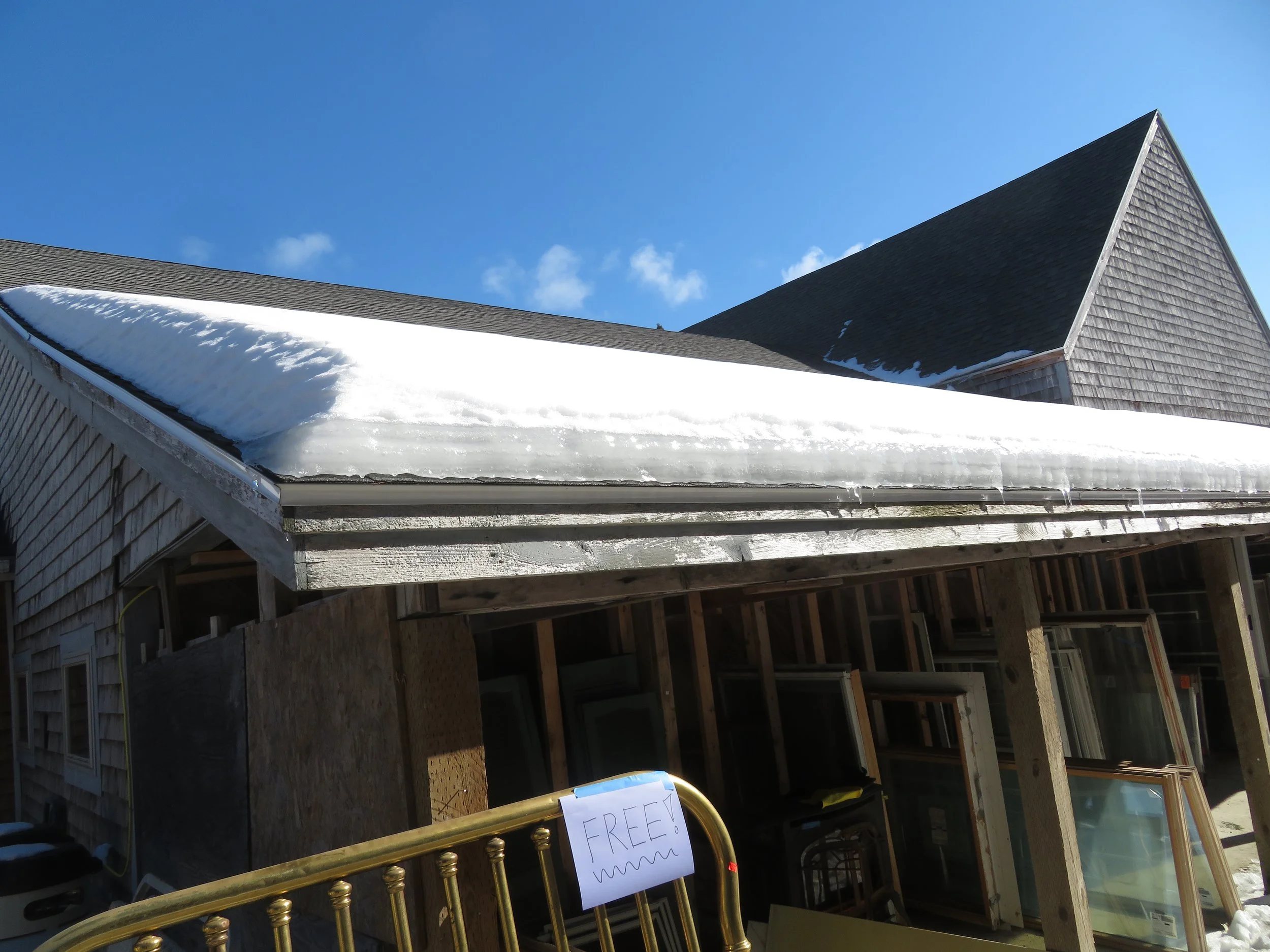
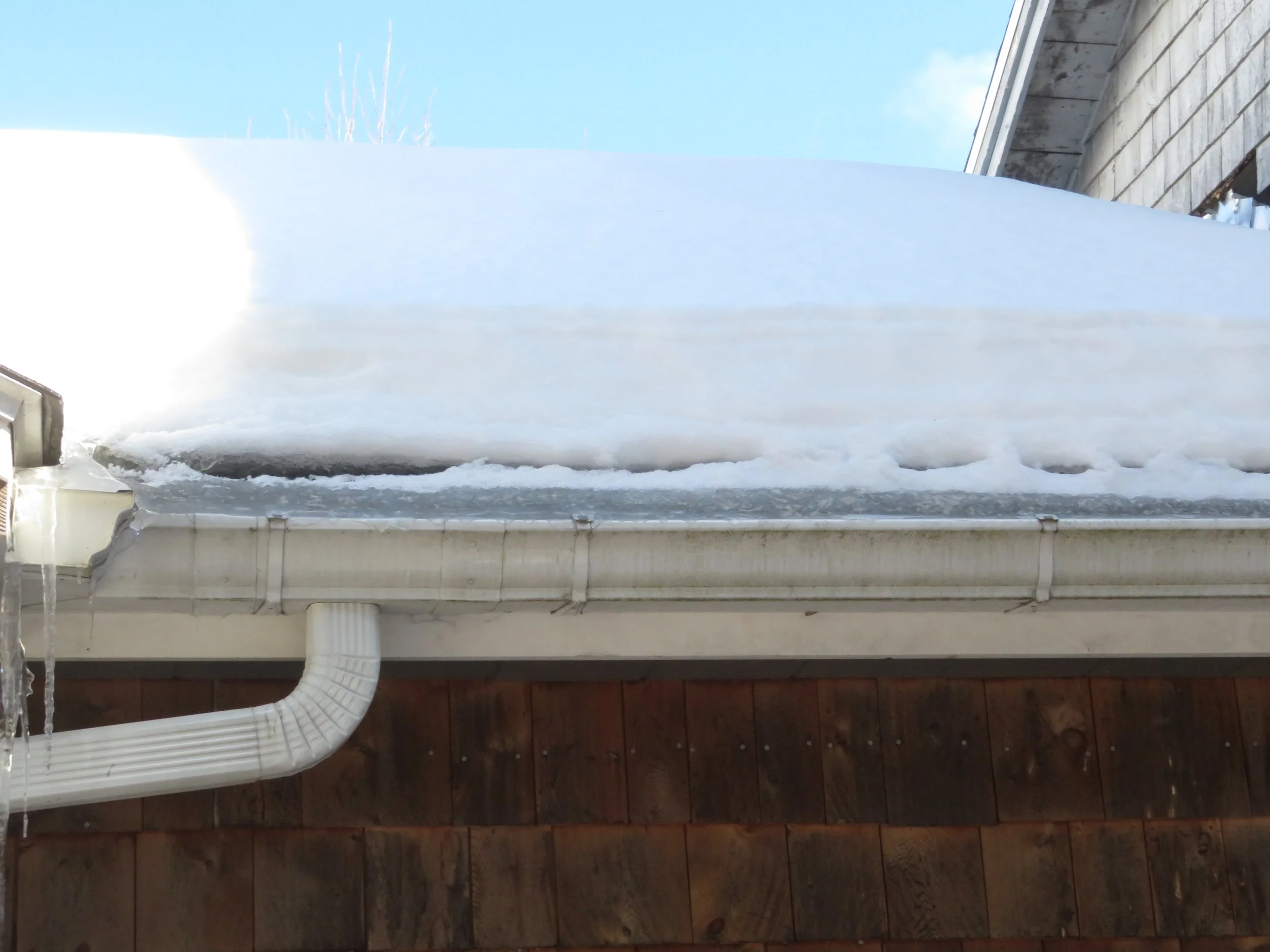
If you live in Maine or any cold-weather climate, you’ve probably seen thick ridges of ice hanging from roof edges. In the photos above, you can see significant icicle buildup along the eaves and a thick band of ice beneath the snowpack. That condition is known as an ice dam — and it can cause serious damage to a home.

At Breakwater Inspections, we frequently observe ice damming during winter inspections. Understanding how and why they form is the first step in preventing costly repairs.

What Is an Ice Dam?

An ice dam is a ridge of ice that forms along the edge (eaves) of a roof. It blocks melting snow from draining properly. When water backs up behind this ice ridge, it can seep under shingles and into the home.

Ice dams are not just decorative icicles. Long icicles like those shown in the photos are often a visible warning sign that ice damming is occurring above.

How Do Ice Dams Form?

Ice dams develop through a simple but destructive cycle:

  1. Snow accumulates on the roof.

  2. Heat from inside the house warms the roof deck.

  3. The bottom layer of snow melts, even when outdoor temperatures are below freezing.

  4. Meltwater flows down the roof toward the colder eaves.

  5. The water refreezes at the roof edge, forming a ridge of ice.

  6. The cycle repeats, building thicker ice over time.

In the images above, you can see:

  • A pronounced ice ridge at the eaves.

  • Extensive icicle formation.

  • Heavy snow coverage above the ice line.

That’s classic ice dam development.

Ice Dams Can Form Without Gutters

There is a common misconception that gutters cause ice dams. While clogged or poorly installed gutters can contribute to ice buildup, gutters are not required for ice dams to form.

Ice dams develop primarily because of:

  • Heat loss from the interior of the home.

  • Inadequate attic insulation.

  • Poor attic ventilation.

  • Air leakage into the attic (recessed lights, attic hatches, wiring penetrations).

In fact, as shown in one of the photos above, ice dams can form on roof edges with minimal or no gutter influence. The key factor is temperature differential — warm roof surface above and freezing temperatures at the eaves.

Why Are Ice Dams a Concern?

Ice dams are not just cosmetic. They can cause significant damage, including:

1. Interior Water Damage

Water that backs up behind the ice can:

  • Soak roof sheathing

  • Leak into insulation

  • Stain ceilings and walls

  • Cause drywall damage

2. Mold Growth

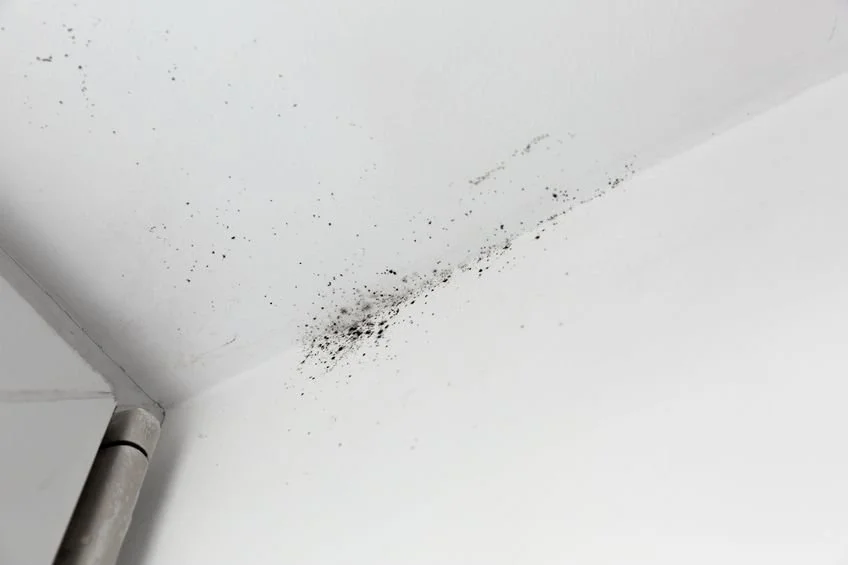
Repeated wetting of insulation and framing creates ideal conditions for mold development.

3. Structural Deterioration

Prolonged moisture exposure can rot roof decking, fascia boards, and wall framing.

4. Shingle Damage

The freeze-thaw cycle can loosen or damage shingles, reducing roof life expectancy.

5. Safety Hazards

Large icicles and falling ice sheets pose risks to people below.

The long, thick icicles shown in the photos are a visible indicator that melting and refreezing is actively occurring — which means water movement is happening beneath the snow layer.

How to Prevent Ice Dams

Effective prevention focuses on controlling heat loss and roof temperature:

  • Improve attic insulation levels.

  • Seal air leaks between the living space and attic.

  • Ensure proper attic ventilation (balanced intake and exhaust).

  • Maintain consistent roof surface temperatures.

  • Carefully remove excessive snow buildup when conditions warrant.

Temporary fixes like roof raking can reduce immediate risk but do not address root causes.

When to Be Concerned

You should be concerned if you notice:

  • Thick ice ridges along the eaves.

  • Large, persistent icicles.

  • Water stains on ceilings during winter.

  • Ice buildup recurring every season.

If ice dams are present, the underlying issue is almost always energy loss or ventilation imbalance.

Final Thoughts

Ice dams are a building performance issue — not just a winter nuisance. They indicate that heat is escaping from the home and that roof edge temperatures are allowing refreezing.

The photos above show textbook examples of significant ice dam formation. Left unaddressed, this condition can lead to interior damage and long-term structural concerns.

If you’re experiencing ice dams or want to understand how your home is performing during winter, Breakwater Inspections can help evaluate insulation, ventilation, and roof conditions to identify contributing factors before damage occurs.

Winter reveals weaknesses in a home. Ice dams are one of the clearest warning signs.

What Does a Home Inspection Report Tell You?

Buying or maintaining a home comes with a lot of questions, and a home inspection report is designed to answer the most important ones. At its best, it’s more than a checklist; it’s a professional evaluation of how a house is performing today and what it may need tomorrow.

A well-prepared inspection report helps you move forward with clarity, confidence, and maybe even a little peace of mind.

An Overall Look at How the House is Holding Up

A home inspection report starts with the fundamentals. It evaluates the major systems and components that keep a house standing, safe, and functional. This includes structural components like foundations, framing, and roofs, as well as siding, windows, and drainage.

Rather than simply saying something is “good” or “bad,” the report explains conditions in plain language. Is that crack cosmetic or structural? Is the roof near the end of its life or just showing normal wear? Especially in older or historic Maine homes, understanding traditional construction methods and aging materials is key to interpreting what you’re seeing.

Ultimately, the goal is perspective. Not every issue is a deal-breaker, and not every upgrade is urgent.

The Details That Matter Day to Day

Beyond structure, a home inspection report dives into the systems you rely on every single day, including electrical systems, plumbing, heating, cooling, and insulation. These sections often reveal safety concerns, deferred maintenance, or opportunities for improved efficiency.

You’ll learn whether electrical panels are properly installed, if plumbing shows signs of leakage or corrosion, and how well the home manages heat during long Maine winters. For buyers, this helps prioritize repairs and budget realistically.

What It Means for Your Next Move

A professional home inspection report helps you decide what to do next. Whether you’re negotiating a purchase, planning renovations, or simply getting to know a property better, the report supports informed decisions.

It also gives you the language to talk with contractors, specialists, or sellers. Instead of guessing, you’re working from documented observations and professional insight tailored to the property’s age, style, and location.

In the end, a home inspection is about confidence and knowing where you stand before you move forward.

At Breakwater Inspections, reports are written by a certified professional property inspector who understands how homes in Maine are built, age, and adapt over time.

For more information about scheduling a home inspection, contact us today.

Tips for the Perfect Christmas Tree

Christmas trees

The Christmas tree shopping season is underway, and the hunt for that perfect tree has begun. As you start thinking about the choice of your Christmas tree, you won't be alone; according to the National Christmas Tree Association, around 30 million live Christmas trees are sold each year in the United States.

Whether you buy your tree from your favorite charity, a "choose-and-cut" farm, or your local farm stand, here are some ideas on how to make sure it stays fresh, green, and festive through the season.

Shopping:  As with anything that we buy that is going to be decorative in the home, there are choices, and everyone has an opinion and a preference. The right tree is the one you like... it's that simple. Beyond that, all you need is to keep in mind some shopping guidelines to ensure that the one you select is a good fit in terms of size and freshness.

Tips for Buying Christmas Trees: Before you bundle up the family and head out on the quest for this year's tree, decide on a location for your tree. Measure both the vertical and horizontal dimensions of the space to make sure the tree will fit. While a highly visible pride of place is always aesthetically the best spot, the tree is best located away from heat sources and shouldn't block entrances or routine household traffic.

Once you have the space measurements in hand and your ideal tree in mind, start shopping with an eye for freshness. Buying from a choose-and-cut tree farm is the best assurance of the freshest tree, but there are plenty of great choices available at other lots too. Do a freshness test by sharply bending a few of a tree's needles with your fingers: except in super-fibrous pine varieties, fresh, green needles will break crisply just like a fresh carrot. It is normal to expect some dry interior needles. Any tree that has excessive needle loss and foliage discoloration, wrinkled bark or a musty odor is not fresh and would not be a great choice. If in doubt, as the vendor what the arrival date of the tree was. If in doubt, move on to another lot.

Christmas tree varieties:  Availability, decoration style and family tradition all influence the choice of tree. Here's an overview of the most commonly available varieties.

Balsam fir: The Balsam fir is a long-lasting variety with fairly short, dark-green needles, great form and a pleasant scent.

Colorado blue spruce: The symmetrical form and attractive blue foliage of this variety make it a pleasant holiday addition. Just watch out because the needles can be sharp.

Douglas fir: One of the most popular varieties with short, soft blue-green needles giving off a sweet fragrance when crushed.

Fraser fir: Dark blue-green color, upward-turning branches and a pleasant scent are the hallmarks of the Fraser fir.

Noble fir: The stiff, well-spaced branches of the Noble fir make it a popular choice. It is also commonly used in other decorations such as wreaths and swags.

Scotch pine: The most common of American Christmas trees, the Scotch pine is lush and long-lasting, and its needles won't fall when they're dry.

White pine: This variety has flexible, soft bluish-green needles that are two and a half to five inches long. White pines don't have much of an aroma, and have good needle retention.

White spruce: The best needle retention in the spruce family. The short, stiff needle form give it a great natural shape for easy decorating.

Care and feeding of your Christmas tree:  After buying your Christmas tree and getting it home, it's time to decide whether you'll be putting it up right away or waiting for a bit before doing the trimming. If you are going to wait, trim the bottom of the trunk and stand he tree up in a bucket of water. For outdoor storage, choose a shady, and sheltered spot. The tree's first 24 hours at your home are typically its thirstiest, so keep an eye on the water level.

When you're ready to bring your Christmas tree indoors, make sure you've got a stand suited to its dimensions, with a reservoir allowing one quart of water capacity for every inch of the trunk's diameter. Cut another half inch off the bottom of the tree's trunk before placing it in the stand. Make sure the cut is straight across to ensure that it will rest flat in the stand. After placing the tree in the stand, and in it chosen location fill the reservoir with plain tap water. Despite the many ideas of things to add to the water, the leading thinking is that plain water is the best choice. Check the water level daily to make sure the water line is above the trunk's base, and this will keep the tree fresh and lush throughout the holidays.

When its time comes: The season's end will eventually arrive, and you have a chance to do something for the environment. Christmas trees can be easily recycled into nutrient-rich mulch. Most cities and towns have places that accept old tree, and if you're lucky, collection programs. Check your town's website for what they can do.


So many pretty lights

The holiday season is a time for celebration, seeing friends and family and enjoying the spirit of the season. Many of us mark this time of the year with all kinds of traditions including decorations. While decorations—particularly those including lights—can be beautiful, we should also be mindful of safety. Too many accidents result in tragedy every year from carelessness or faulty lighting. Here are some simple safety tips to keep in mind as you start stringing the lights and lighting up the night.

Tips for inside lighting

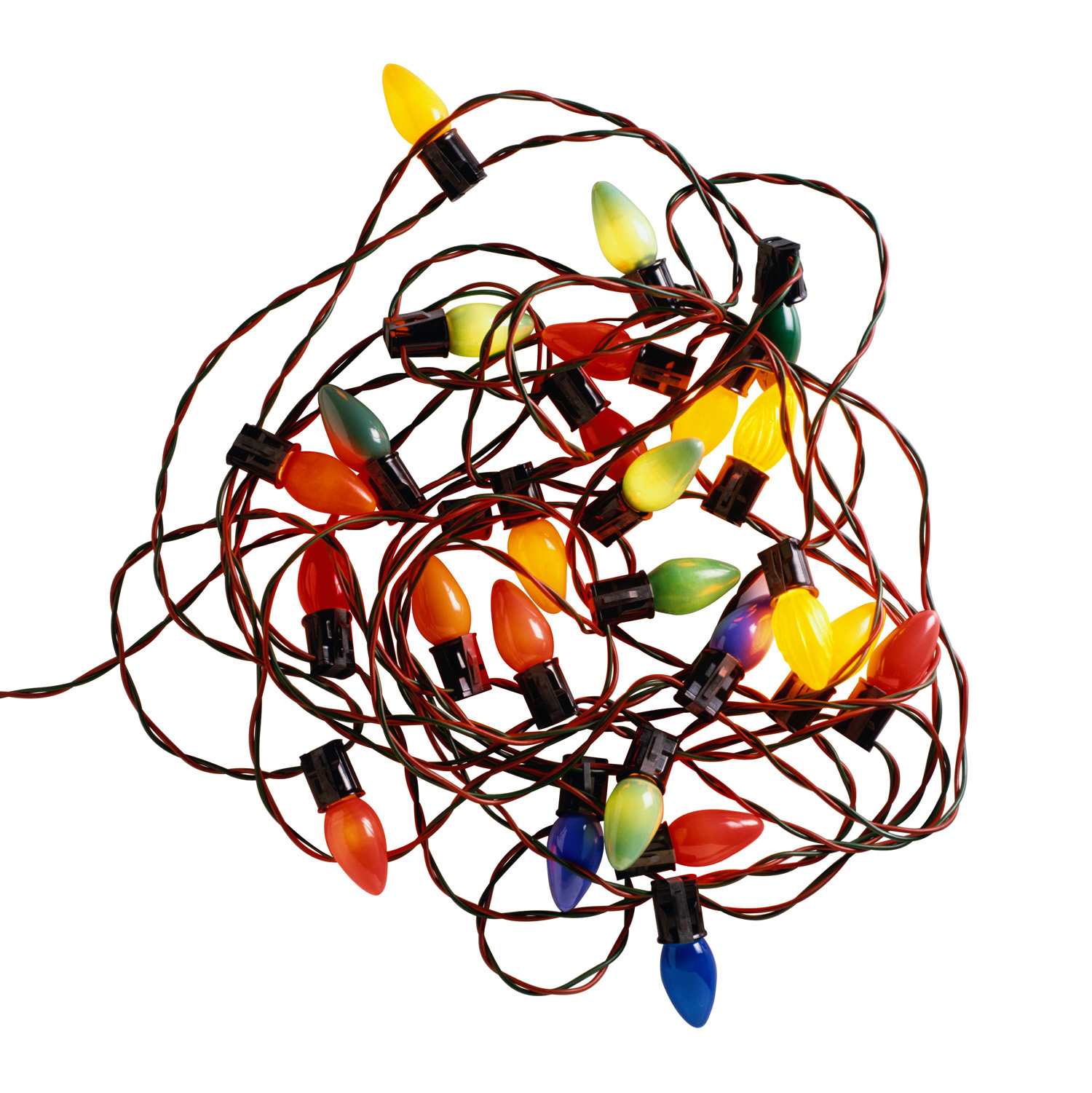
  1. Before you start stringing the strands of lights, carefully check them for cracked cords, frayed ends or loose connections. If you ask yourself the question "I wonder if these are OK?", assume the answer is "No".
  2. If you have a young pet, keep an eye out for chewed cords or wires. Their first Christmas might need to be one without lights!
  3. Replace burned out bulbs with bulbs of the same wattage. The strands are designed for the size of bulb they came with.
  4. When you go to bed at night or leave the house, turn off your Christmas lights.
  5. Never pull on a string of Christmas lights, it stresses the cords and can lead to fraying or cracking. Always store Christmas lights loosely wrapped for the same reason.
  6. Modern lights have fused plugs, preventing sparks in case of a short circuit. Replace old strands of lights that don't have fuses with sets of newer, safer lights.
  7. Keep “bubbling” lights away from children. These lights with their bright colors and bubbling movement can tempt curious children to break the candle-shaped glass, which can cut, and attempt to drink liquid, which contains a hazardous chemical.
  8. Never hang Christmas lights on a metal tree. The tree can become electrically charged and shock someone. The tree can also short out the Christmas lights and cause a fire.
  9. The combination of short circuits in electrical lights and dry trees can be deadly. Keep your tree well-watered; not only will it stay fresh and green, but it might also keep your house from burning down.

Tips for outdoor lighting

  1. Not all lights are rated for outdoor use. Indoor lights often have thinner insulation, which can become cracked and damaged when exposed to the elements outdoors. So be sure to only use lights outdoors that are rated to be used outside. The packaging will note whether the lights can be used indoors, outdoors, or both.
  2. All outdoor lights and electrical decorations should be plugged into a ground-fault circuit interrupter (GFCI). You can buy portable units for outdoor use, or you can have them permanently installed by an electrician.
  3. Use the correct extension cords. Outdoor cords can be used inside or outside, but inside extension cords are only for inside.
  4. When running extension cords along the ground, make sure to elevate plugs and connectors with a brick to keep snow, water and debris out of the connections.
  5. Tape down any ground-level extensions cords to prevent people from tripping over them.
  6. Do not overload extension cords - they can get hot enough to burn. Check them after you have turned the lights on, if they are feeling warm or hot, they may be overloaded.
  7. Stay away from all power lines and feeder lines (these go from the pole to the house).
  8. Secure outside Christmas lights with insulated holders (never use nails, staples, or tacks) or run strings of lights through hooks.
  9. Check to make sure lights have been rated by a testing laboratory. You can see a list of federally recognized labs on the Occupational Safety & Health Administration's website.
  10. When you put your lights back into storage after the holidays, make sure to put them in a well-sealed container to prevent possible water damage and to keep hungry rodents from turning them into lunch.
  11. As a final tip: If you are buying Christmas lights for your home this year, look for energy-efficient LED lights that use 75 percent less energy and last years longer than an incandescent light string , according to ENERGY STAR.

Let's keep our Christmas and holiday safe - it will be a lot more fun!

As the clock turns

We all remember to change our clocks as daylight savings time begins or ends. Well, sooner or later we do... sometimes it's after we are an hour late or early for our first appointment of the day.  Somehow we correct the time and get on with our days and don't think anymore about it. Maybe we should - this is a milestone that happens twice a year and it can also serve as a reminder for a few other things we should do around our houses from time to time that are easily and often forgotten. Here is a handy list of tasks and chores that need to get done: Smoke and carbon monoxide detectors - If your smoke detectors and carbon monoxide detectors use batteries, they need to be changed from time to time. While one could contend that the batteries can last for more than six months, is that a chance you are willing to take? Get a handful of batteries and the ladder, and take a trip around the house. This will only take you a few minutes and can save lives. While you are changing the batteries, take note of the device seems dusty or greasy. If so, clean the cover so the unit can work properly.

Dryer vent - Ah yes, the dryer vent. The often forgotten thing attached to your dryer that serves a really important function. Dryer vents usually catch and build up lint along the rough edges and the ridges. When the vent builds up too much lint, the dryer will work less efficiently and use more power. Vents can also become fire hazards when they build up too much lint. Cleaning the vents is easy, and is best done with long handled flexible brushes made for this purpose (available at most home centers). Be sure to check your dryer's owner manual for any instructions on cleaning the lint trap area.

Exhaust fans - While we are on the subject of venting stuff out of our homes, the exhaust fans in our bathrooms and kitchen also need cleaning. Check the grill on your bathroom fans and clean any dust that has built up. If you are able, it is also good to pull the grill off and clean inside. Be very careful when doing this and be sure that the unit is turned off. The exhaust fan in the kitchen over the stove needs a cleaning too. Check the owner's manual for the procedure to remove the filters and how they should be cleaned or replaced. Some of the filters can be cleaned in the dishwasher, and others are intended to be replaced. While this job can be a little messy, it will help the system work more efficiently, and get the smoke and vapor from the next cooking adventure out of the house.

Water filters - Here is one that is really easy to forget. Some of us have whole-house water filters in our basements while others are under the sink. Some refrigerators have water filters too. What's common to all of these is that they are out of sight - and out of mind. Unless your whole house system has instructions to contrary, it is a good idea to check the filter at least twice per year, and probably change it. If you have filters under the kitchen or bathroom sinks, check those too. Some refrigerators have lights indicating when a filter is in need of replacement. Others don't so now is a great time to get the old one out and give it old heave-ho. Be sure to check the respective owner manuals as sometimes there are specific procedures that need to be followed.

Furnace filters - As long as we are on the subject of filters that we never see and remember to change even less often, don't forget about your furnace. If you have a forced hot air furnace in your home, the unit probably takes a filter to keep the air in your home clean. The filters are usually located in the duct area that is part of the return and right next to the furnace. Some furnaces take more than one filter, and there are a whole variety of sizes, so be sure to check it out before you go shopping. During the heating season, you may find that you need to change the filter more often - perhaps once per month. This is worth keeping eye on as it will help your furnace run more efficiently.

Clocks - If you still have any energy left after doing all this, don't forget to set your clocks! And, whatever you do, remember to set them in the right direction. Think of it this way: Spring forward and Fall back.

Good news... yes, it really seems to be.

shutterstock_51354178_for-web-site2.jpg

In today's issue of DSNews.com there is an article entitled "July Home Prices See Biggest Yearly Increase Since 2006: CoreLogic" that seems to suggest we are on a good track for the housing market. It discusses:

  • Home prices saw the biggest nationwide year-over-year increase since August of 2006
  • Home prices (including distressed sales) increased year-over-year by 3.8 percent in July
  • July marked the fifth consecutive increase in home prices on both a monthly and yearly basis
  • Removing distressed sales, home prices increased year-over-year by 4.3 percent compared to July 2011 and 1.7 percent relative to June 2012 (the fifth consecutive month-over-month decrease)
  • According to the report, prices (including distressed sales) are expected to rise at least 0.6 percent from July to August, putting August on track for a 4.6 percent year-over-year increase.

The link to the full article is: http://www.dsnews.com/articles/july-home-prices-see-biggest-yearly-increase-since-2006-corelogic-2012-09-04

While there have been signs of improvement over the last months and even years, there is a continuing trend of "more good news than bad". Some experts are suggesting that the positive trends are encouraging and there may a light at the end of the tunnel.

May I suggest some optimism? OK, cautious optimism? Even being mindful of the notion "that a single data point does not a trend make", we are seeing more and more data points that are pointing in a positive direction. Let's keep watching...


Good news? Hold on... now not-so-much...

News about the housing market... now there's a rollercoaster if there ever was one these days. One day it feels as though there is hope with some news suggesting that there is a light at the end of the tunnel, and then the next day it seems as though we are heading back to 2008. In all fairness, the news is not generally simple. The metrics that are tracked and reported are generally complex and sometimes complicated. Once this is layered with editors' agendas and political considerations, the news can lose much of its significance.

Sometimes, just as there seems to have been a trend in one direction or another, there is suddenly an abrupt change in direction. Of late, there seems to have been more good news than bad. Yesterday, all of a sudden there was a headline suggesting that June's home sales were at a five-month low... not what we need to hear. There was some encouragement in an article in today's DSNews (www.DSNews.com). The title was "Lack of Inventory Blamed for June's Dip in Pending Home Sales". The article went on to explain some of the statistics behind the news, and they suggest the root cause of the issue to be a lack of inventory.

Long debates could ensue about the significance of a low inventory, but I believe that is better news than the alternative.

While we are in uncharted economic waters, I think it is fair to say that we are through the worst of the times, and that the trends are positive. Let's all keep our fingers crossed and continue to do what we all can do to get us through to a stronger economic and real estate market.

All the best!

John Howard

207-956-0323

JLH@BreakwaterInspections.biz

www.BreakwaterInspections.biz